Your Child Practises Maths 5 Times a Week but Writes Compositions 4 Times a Year. That Gap Explains More Than You Think.
Why practice volume and feedback quality matter more than vocabulary lists, model answers, or finding the right tuition centre.
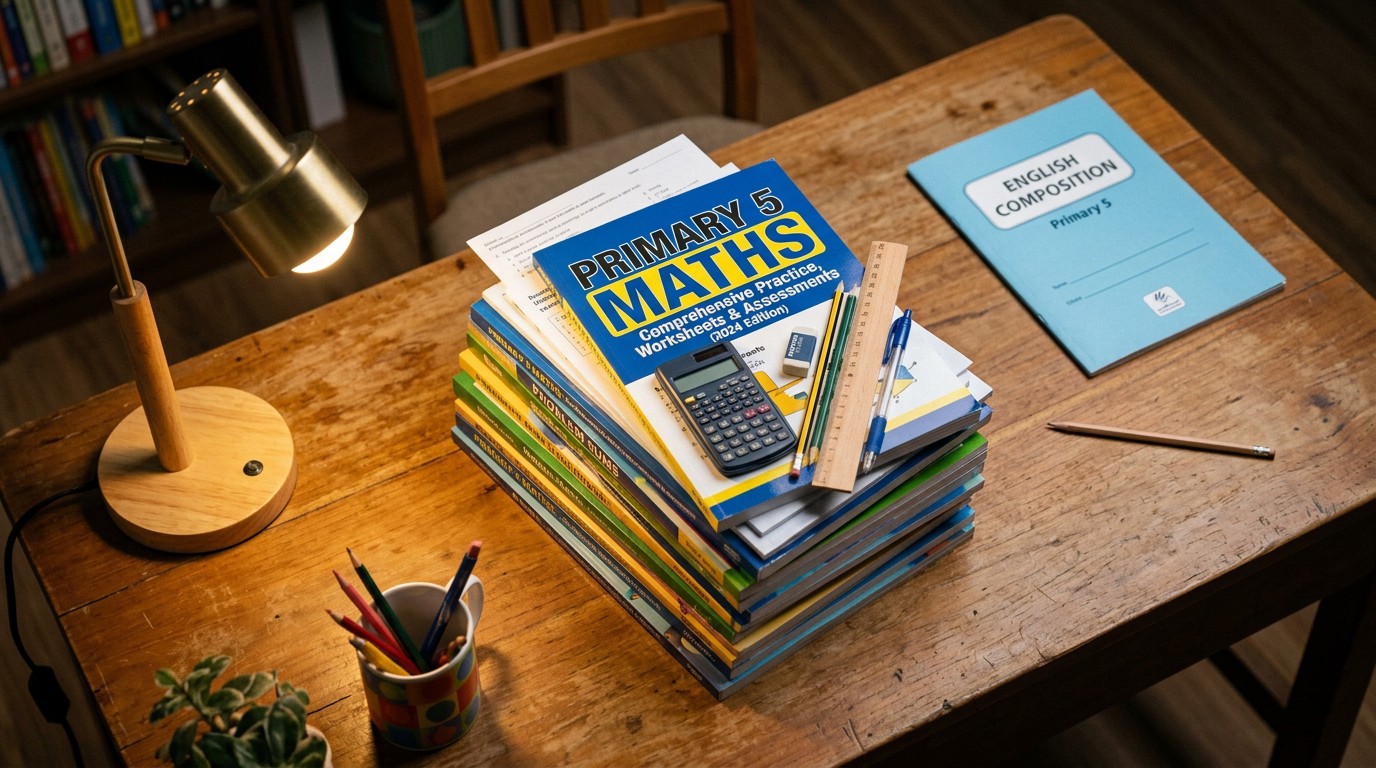
Think about the last time your child sat down to practise maths. It was probably yesterday. Or this morning. Between school homework, assessment books, and the occasional tuition worksheet, most primary school children solve dozens of maths problems every single week.
Now think about the last time your child sat down and wrote a full composition from start to finish. Not a comprehension passage. Not a grammar exercise. A complete story, with an opening, a build-up, a climax, and a resolution.
The answer is probably weeks ago. Maybe even longer.
This is not a criticism. It is simply what ends up happening. Now consider this: would you expect your child to improve at swimming by going to the pool four times a year? Would you expect them to get better at piano with one lesson a month and no practice in between?
Of course not. Yet when it comes to composition writing, that is exactly what many of us are hoping for.
The real reason composition feels harder than other subjects
Parents often tell us their child is "just not good at writing." But when we dig a little deeper, the picture that emerges is not about talent. It is about exposure.
Maths has a natural feedback loop built into the school day. Your child does a worksheet, gets it marked, sees where they went wrong, corrects it, and moves on. That cycle happens daily. Over the course of a year, a P5 student might complete hundreds of maths problems with feedback.
Composition is different. Your child writes a piece, submits it, waits for it to come back, receives a grade and a few brief comments, and then moves on to the next topic. There is rarely time to rewrite, reflect, or try a different approach. The learning moment has passed.
This is not a failure of schools or teachers. Marking compositions is genuinely time-consuming. A teacher with 35 students cannot provide detailed, personalised feedback on every piece of writing in the moment. It is simply not feasible.
Writing improves through writing. There is no shortcut. But writing alone is not enough either. Writing without feedback is like practising piano without a teacher ever hearing you play.
Why "read more" is not the whole answer
The most common advice parents hear is: get your child to read more. And reading absolutely helps. It builds vocabulary, exposes children to different sentence structures, and gives them a sense of how stories work.
But reading alone does not make a child a better writer, any more than watching football makes you a better footballer. Reading is input. Writing is output. They are connected, but they are not the same skill.
Many children read extensively and still struggle to produce a well-structured composition under timed conditions. That is because reading teaches you to recognise good writing, while practising teaches you to produce it. The gap between those two things is where most children get stuck.
The same applies to memorising model compositions or good phrases. These can certainly help with Language marks, and we would never discourage them. But knowing a phrase and deploying it naturally in your own story are different skills. One requires memory. The other requires practice.
What actually moves the needle: more reps, faster feedback
If you speak to any writing teacher, tutor, or curriculum specialist, they will tell you the same thing: writing improves through writing. There is no shortcut.
But here is the part that often gets missed: writing alone is not enough either. Writing without feedback is like practising piano without a teacher ever hearing you play. You might be reinforcing the same mistakes over and over again without realising it.
What children need is a combination of two things:
- More frequent practice. Not three compositions a term, but one or two a week. Short enough to be manageable. Frequent enough to build fluency and confidence.
- Timely, specific feedback. Clear guidance on what worked, what did not, and how to do it differently next time. Ideally, this happens while the writing is still fresh in the child's mind.
When these two elements come together, something interesting happens. Children stop dreading composition because it is no longer a high-stakes, infrequent event. It becomes a regular activity where they can see themselves improving. The fear of the blank page starts to fade, because they have faced it often enough to know they can fill it.
What does this look like in practice?
You might be thinking: that sounds great in theory, but how do I actually make this happen at home? I am not an English teacher. I do not have hours to mark my child's work. And my child already has a packed schedule.
These are fair concerns. Let us walk through what a realistic writing practice routine looks like.
A full composition does not have to happen every time. Even writing just the opening paragraph of a story, or practising the climax, builds the muscle. Not every session needs to be a 300-word piece from start to finish.
Word Wizards is built around this idea. Features like "Pick a Part" let your child choose just one section to practise, whether it is the introduction, the main event, or the ending, so they can focus on the part they find hardest without the pressure of writing an entire composition. "Make it Vivid" takes it further with targeted exercises that challenge your child to rewrite a short paragraph using more descriptive, sensory language. These are quick, focused sessions that build specific skills, the same way a footballer might spend one training session on passing and another on shooting, rather than playing a full match every time.
The biggest challenge for parents is not getting their child to write. It is providing useful feedback afterwards. And waiting for a teacher or tutor to return the work defeats the purpose of regular practice.
This is where technology can genuinely help. Platforms like Word Wizards were built around this exact problem. Your child picks a topic, receives coaching tips before they start writing, completes their composition, and gets detailed feedback within minutes. Not days. Not weeks. Minutes.
The feedback is specific: clear observations about story structure, relevance to the topic, vocabulary usage, and grammar. A model answer is also provided after every attempt, so your child can see what a strong response to the same topic looks like.
One reason children dread compositions is that every piece of writing feels like a test. It goes into a book, it gets graded, it gets compared. When writing happens at home on a platform with no classroom pressure, the stakes drop.
Word Wizards leans into this by making every writing session feel like something worth coming back to. Every composition your child completes earns them coins. Writing regularly builds a daily streak, which earns bonus coins. And those coins can be spent on unlocking magical accessories for their avatar, from wands and crowns to wizard owls, with new items dropping every week.
It sounds simple, but it changes the conversation at home. Instead of "you need to practise your composition," it becomes your child asking if they can write one more to unlock the next reward.
The confidence question
Here is something that does not get discussed enough: most primary school children do not actually dislike writing. What they dislike is the feeling of not knowing whether what they have written is any good.
In maths, the answer is either right or wrong. The feedback is instant and unambiguous. In composition, children hand in their work and then wait in uncertainty. Did I do well? Was my story boring? Did I use the right structure? The longer they wait for an answer, the more anxious the next composition feels.
Frequent practice with immediate feedback breaks this cycle. When a child writes a composition and finds out within minutes what they did well and where they can improve, they start to build an internal sense of what good writing feels like. They begin to self-correct. They develop confidence not from praise, but from evidence.
That confidence is what separates a child who writes reluctantly from one who writes willingly. And willingness, over time, is what produces improvement.
A note on what this is not
We are not suggesting that regular practice at home replaces classroom teaching, tuition, or a love of reading. These all play important roles. A good English teacher provides structure, technique, and inspiration that no tool can fully replicate. What we are saying is that there is a missing piece in most children's writing development, and it is simply this: they do not write often enough, and when they do, they do not receive feedback quickly enough to learn from it.
Fixing that one gap can unlock progress that surprises parents. Not because their child has suddenly become a different writer, but because they are finally practising the way every other skill gets practised: frequently, with guidance, and without fear.
Try Word Wizards today
Word Wizards is an AI-powered English composition coaching platform for Singapore primary school students (P1 to P6). Children choose a topic, receive coaching tips, and get detailed feedback within minutes. Every attempt also includes a model answer.
Try Word Wizards Free →First month on us · No card required · Cancel anytime